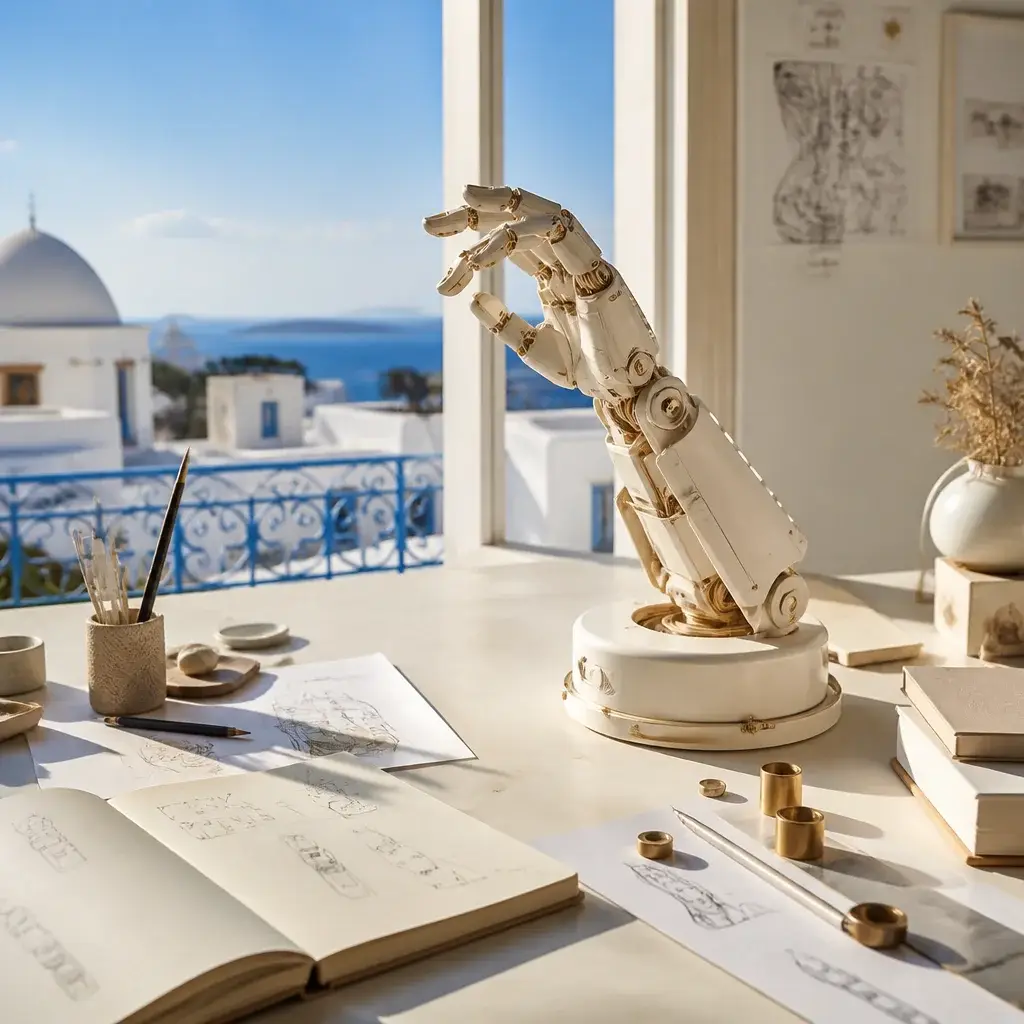
The argument that machines will empty the studio has always been too loud. In Tunisia, the more interesting question is quieter: who gets to practice craft, and at what scale, now that a draft can be generated before breakfast.
Product teams in Tunis are using models the way previous generations used interns and night shifts — to compress the distance between an idea and a version that can be shown. The designer still decides. The architect still holds the line. The writer still knows when a sentence is false.
What has changed is access. A two-person studio can now produce a multilingual platform, a booking flow and a visual system in a season. That is not luxury. It is leverage. It is why Tunisian companies are appearing in searches that used to stop at Europe.
Product teams in Tunis are using models the way previous generations used interns and night shifts — to compress the distance between an idea and a version that can be shown.
The risk is sameness. If every interface is drafted by the same models, every city will look like a prompt. The studios that will matter in 2060 are the ones that feed the machine with local material: light, dialect, the pace of a medina, the patience of a desert road.
Work is not disappearing. It is being redistributed toward taste, judgment and responsibility. Those remain human. Tunisia has no shortage of them.
Leila Ben Youssef